Delaware
Land Management & Phragmites Programs in Sussex County, Delaware
Coastal Delaware: waterfront estates, farm ground and association frontage along the Inland Bays and the Delaware Bay shore. Phragmites programs, selective clearing, lanes and corridors, on low-ground-pressure equipment suited to sandy soils and marsh edges.
What work do you do in Sussex County?
Four principal lines of work: Phragmites programs on the water, forestry mulching and selective clearing on coastal-plain pine, lanes and corridors on sandy soils, and ditch and right-of-way ground and brush clearing for farms and tax-ditch organizations. Storm cleanup and estate recovery runs here as well, with 24/7 response.
- Phragmites ground and brush clearing & management for waterfront homes, marinas, and HOA common areas. Ground and brush clearing alone does not control Phragmites; programs pair cutting with treatment. → Phragmites service page
- Forestry mulching & lot clearing on coastal-plain pine and mixed hardwood.
- Lanes & corridors, farm lanes, estate drives, trail access and utility corridors on sandy soils.
- Ditch and right-of-way ground and brush clearing for farms and tax-ditch organizations.
- Storm cleanup & estate recovery after coastal storms, with 24/7 response. → Storm cleanup page
How is Sussex County work documented?
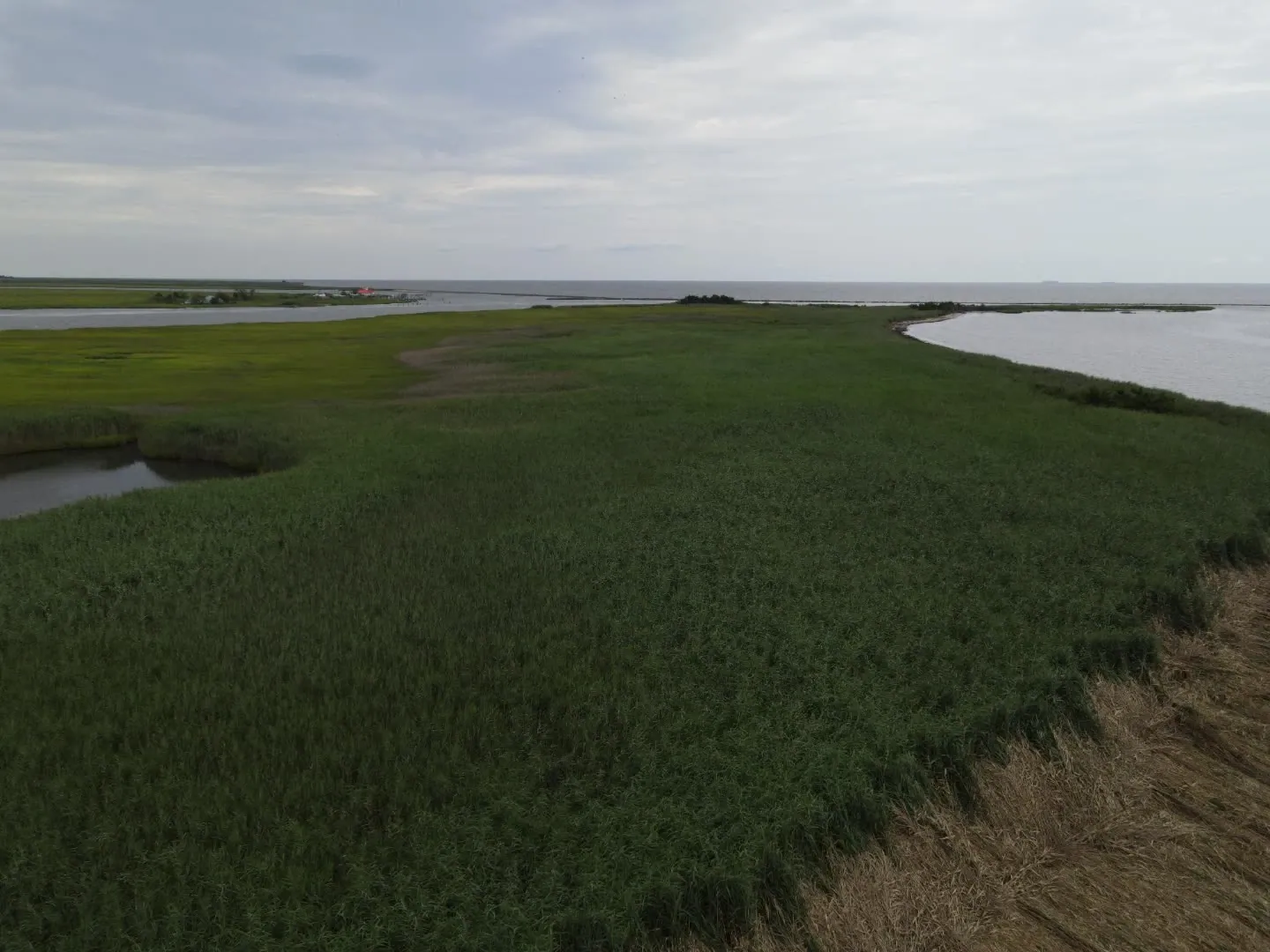
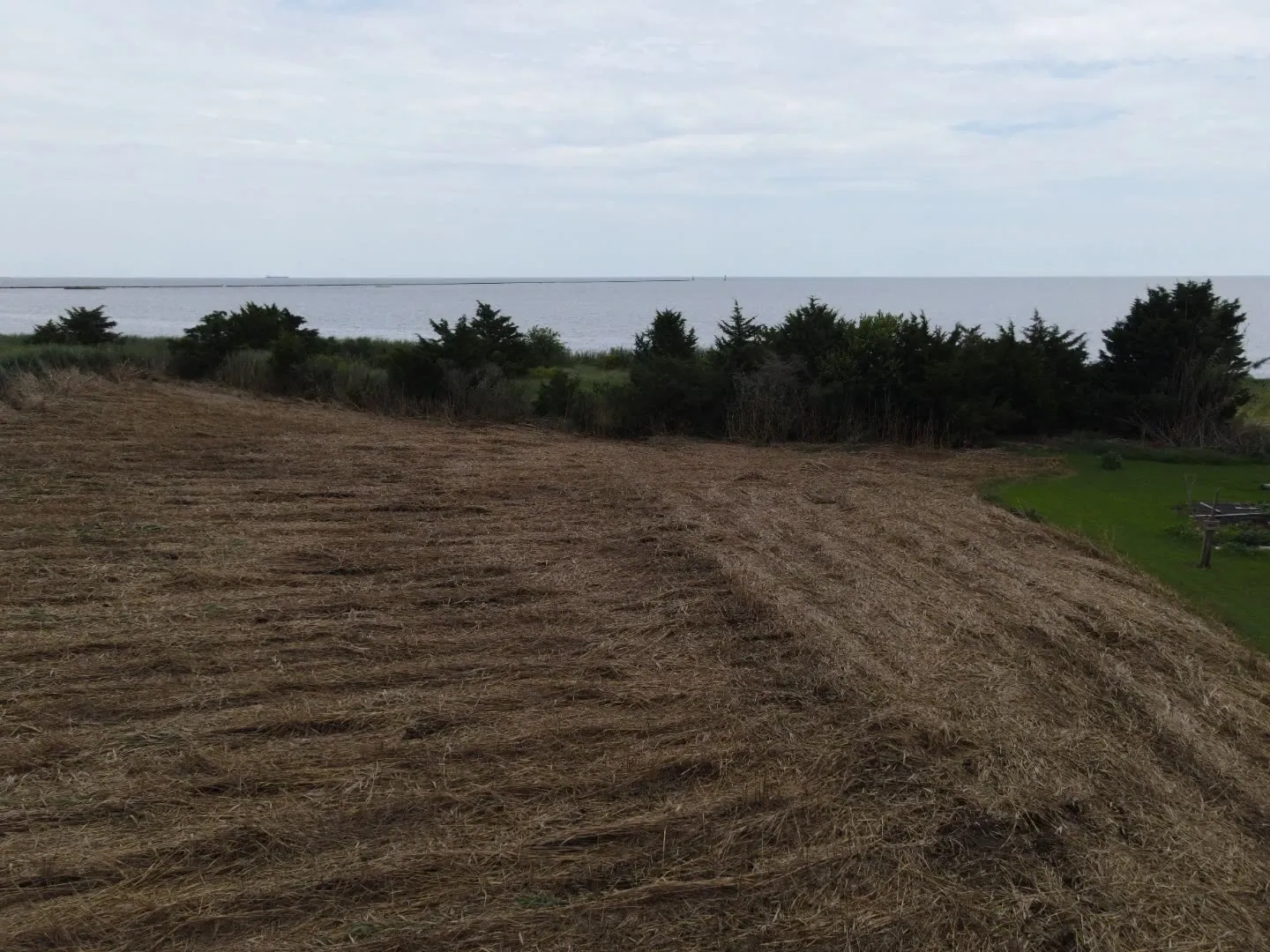
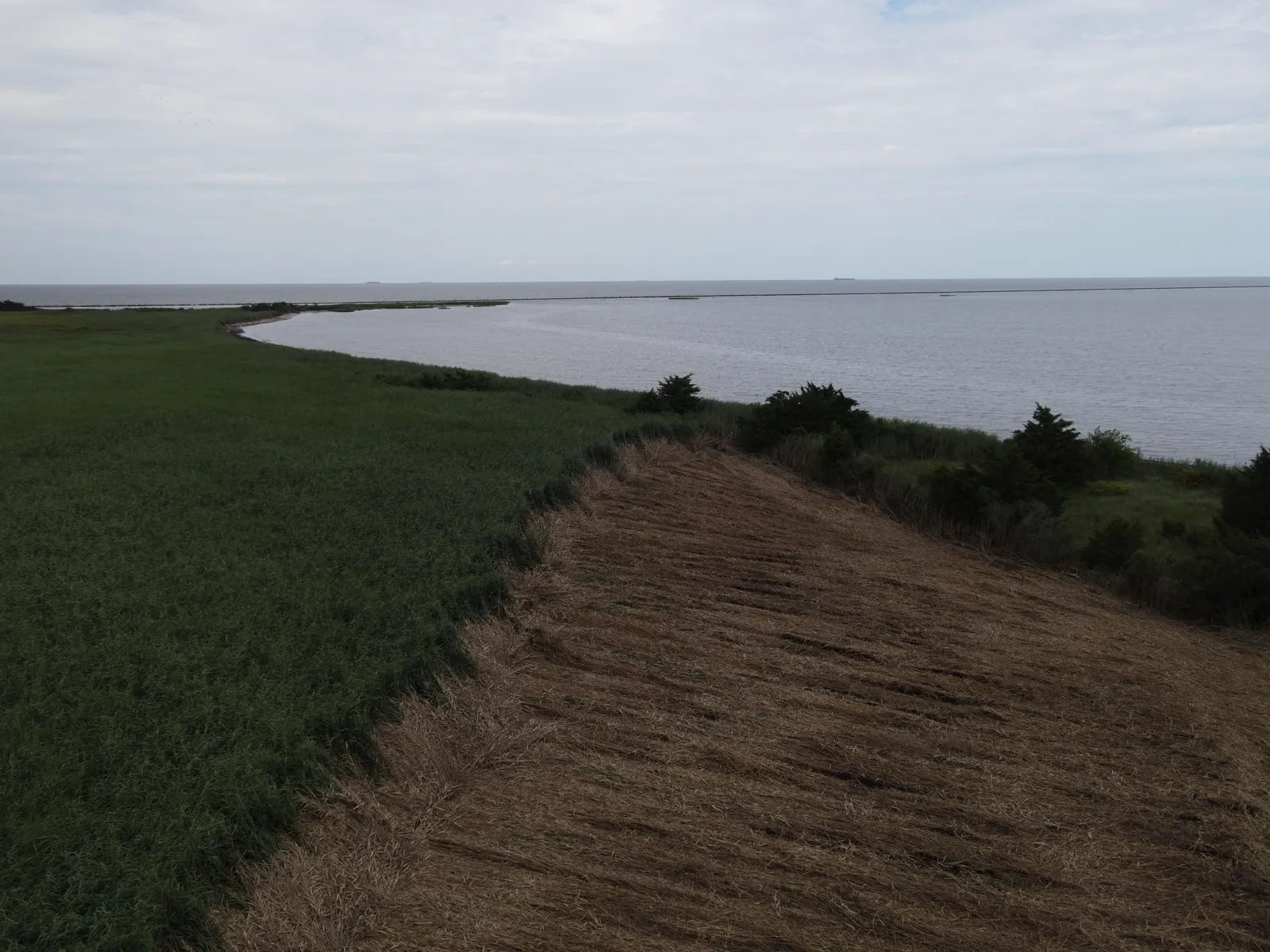
Coastal projects are photographed from the air before and after where the site allows, and the frames above and on the Phragmites page came off that work. We name a community only when a photograph was actually taken there.
What shapes the investment in Sussex County?
Coastal ground has its own variables: stand size and marsh access on Phragmites work, tidal and regulated edges, low-bearing ground, and how far a property sits from the Brandywine Valley core. Sussex work is scheduled in consecutive blocks rather than single days, which is better for the property and better for the investment. A written proposal follows the walk: scope, finish standard, resource plan, stewardship measures, schedule and investment in one document.
| What we assess on the walk | Why it moves the figure |
|---|---|
| Density and stem size | What is standing, how heavy it is, and how many passes the ground needs before it reads finished. |
| Ground and terrain | Slope, surface rock, wet or low-bearing ground, and what the site will carry without being marked. |
| Access and staging | Gates, lanes, tree lines, distance from the road, and where equipment and material can be staged out of sight. |
| Finish standard | Turnout-safe pasture, park finish, selective retention or a working surface, written into the scope rather than left to interpretation. |
| Resource plan | Specialized equipment and project resources matched to site conditions and scope, and the days on the ground they require. |
| Stewardship | Specimen trees, fence lines, wetland and stream edges, soils and drainage protected as part of the work. |
| Schedule | Season, dormant-season windows, and how the work sequences around the rest of the property. |
Every property is assessed on its own ground rather than against a published table. After a private site walk you receive a written proposal setting out scope, finish standard, resource plan, stewardship measures, schedule and investment in a single document.
Which services are available here?
All six, with Phragmites programs concentrated on the Inland Bays and the Delaware Bay shoreline and storm response available 24/7.
New Castle County, DE → · Kent County, DE → · Chester County, PA → · Contact →
Coastal estates and farm ground
Waterfront estates, farm ground and association land share the same coastal conditions. The estate path is set out in full:
Sussex County, Delaware town pages
One page for each of the 25 incorporated municipalities in Sussex County. These are communities we cover, not a list of completed projects.
- Bethany BeachCoast
- BethelRiver
- BladesRiver
- BridgevilleFarm
- DagsboroInland
- DelmarBorder
- Dewey BeachCoast
- EllendaleForest
- Fenwick IslandCoast
- FrankfordInland
- GeorgetownForest
- GreenwoodFarm
- Henlopen AcresCoast
- LaurelRiver
- LewesCoast
- MilfordRiver
- MillsboroInland
- MillvilleInland
- MiltonRiver
- Ocean ViewCoast
- Rehoboth BeachCoast
- SeafordRiver
- SelbyvilleFarm
- Slaughter BeachCoast
- South BethanyCoast
Sussex County work runs through the Coastal & Phragmites Management division.
Sussex County records: Sussex County tax parcels by town and acreage (SussexCounty.ai)
Phragmites, permits, cost-share and timing
Regulatory notes are general guidance; Huntly confirms the rules that apply to each site before work.
What shapes the cost of a Phragmites program in Sussex County, DE?
The size and density of the stand, access to the marsh edge, the frontage involved, the number of years in the program and whether licensed herbicide application is part of it. Licensed applications and permits are quoted as separate visible lines, and every program is priced in writing after an assessment of the stand.
Does Delaware help pay for Phragmites control?
DNREC’s cost-share program covers 87.5% of aerial herbicide treatment for qualifying Phragmites stands (landowner pays 12.5%), applied by helicopter in late summer and early fall over a three-year commitment. Enrollment requires 5 to 200 acres. Applications are first-come, first-served with a mid-summer deadline. If you qualify, we will tell you and help you enroll.
Does ground and brush clearing alone get rid of Phragmites?
No. Ground and brush clearing alone does not control Phragmites; programs pair cutting with treatment. Its rhizomes can spread more than 30 feet sideways and about 3 feet deep (DNREC).
Do I need a permit to cut Phragmites in Delaware?
Activities in Delaware wetlands generally require a DNREC permit (7 Del. C. § 6604), with some exemptions. We confirm with DNREC Wetlands and Waterways before cutting or spraying in tidal wetlands.
When is marsh work scheduled?
Mechanical ground and brush clearing is scheduled on firm or frozen ground in winter. Herbicide is applied by a Delaware-licensed aquatic applicator in the late-summer window DNREC uses, and the state cost-share program sprays by helicopter in late summer and early fall. Track carriers working on low-ground-pressure tracks reach marsh edges that trucks and tractors cannot.
The record, from the drone.
Sussex County marsh work, photographed before and after. These are Huntly frames.
More about Sussex County, DE
Regulatory notes are general guidance; Huntly confirms the rules that apply to each site before work.
Who approves land clearing or earth disturbance in Sussex County, DE?
Clearing in Sussex County, DE usually starts with the county or the local municipality's permit office. As general guidance, the Sussex Conservation District reviews sediment and stormwater plans on municipal and county projects. Disturbing 1 acre or more also needs NPDES construction permit coverage through DNREC. Huntly confirms the rule that applies to each site before work.
Can I burn brush piles in Sussex County, DE?
Delaware bans most open burning from May 1 through September 30. Outside those dates a homeowner may burn small amounts of yard material after notifying the county fire board, but burning land-clearing material is always prohibited except for agriculture, and leaves and grass may never be burned. Huntly mulches brush in place, so no burn permit is needed. Huntly confirms the rule that applies to each site before work.
What grows wild and takes over land around Sussex County, DE?
Typical for Sussex County: Phragmites in wet ground and along ditches, plus groundsel tree, bamboo, and loblolly pine and sweetgum thickets on idle fields. Which ones you have depends on soil and moisture. A site walk sorts it out, and Huntly prices the clearing in writing after the walk.
Is there cost-share money for clearing invasives in Sussex County, DE?
DNREC runs a Phragmites cost-share for landowners with 5 to 200 acres, using aerial application. Drainage ditches aren't eligible. Tax ditch organizations manage ditch channels separately, and your local conservation district can point you to other programs. Herbicide work is done by a licensed applicator and quoted as a separate visible line. Huntly confirms the rule that applies to each site before work.
Does Huntly serve Sussex County, DE, and what does a site walk cost?
Yes. Huntly Land Co. serves Delaware, and the site walk is free inside the service region. Every job is priced in writing after the walk at a fixed price, and mobilization for long hauls is quoted on the estimate. Call (302) 497-5263 or email hello@huntlyland.com.
Is my land in Sussex County, DE on a tax ditch?
Maybe. DNREC says Delaware has 234 tax ditch organizations managing more than 2,000 miles of channels, and ditch rights of way can limit what you clear. Check with DNREC's Tax Ditch Program before work near a ditch. Huntly confirms the rule that applies to each site before work.
Do I need a DNREC permit to cut Phragmites near the water in Sussex County, DE?
Possibly. Tidal wetlands fall under 7 Del. C. ch. 66, and DNREC Wetlands and Waterways verification may be needed before cutting along tidal edges. Marsh edges and non-tidal ground are treated differently. Huntly checks the status of each site and confirms the rule before cutting. Huntly confirms the rule that applies to each site before work.
Who do I call after a storm in Sussex County, DE?
Huntly runs a 24/7 storm line at (302) 497-5263 for downed trees blocking lanes, drives and fields, using a grapple to clear and haul debris. If a tree is on a house or other structure, call a tree service or the utility first. Huntly handles the cleanup after.
Official site: sussexcountyde.gov
Sources: dnrec.delaware.gov (open burning) · dnrec.delaware.gov (sediment stormwater) · dnrec.delaware.gov (tax ditches) · sussexcountyde.gov · millville.delaware.gov (Tupelo Sands SCD letter) · dnrec.delaware.gov (private lands) · dnrec.delaware.gov (cost share questions)
Services in this county
- Forestry Mulching in Sussex County, DE
- Land Clearing in Sussex County, DE
- Forestry mulching across Sussex County: coastal-plain pine and hardwood
- Lot and home-site clearing in Sussex County, DE
- Pasture & Paddock Reclamation in Sussex County, DE
- Farm Lanes, Estate Drives & Riding Trails in Sussex County, DE
- Phragmites Management in Sussex County, DE
- Storm Cleanup & Estate Recovery in Sussex County, DE
- Coastal & Phragmites Management division
- Inland Bays and Delaware Bay shore coverage
- Land clearing in Bethany Beach, DE
- Land clearing in Bethel, DE
- Land clearing in Blades, DE
- Land clearing in Bridgeville, DE
- Land clearing in Dagsboro, DE
- Land clearing in Delmar, DE
- Land clearing in Dewey Beach, DE
- Land clearing in Ellendale, DE
- Land clearing in Fenwick Island, DE
- Land clearing in Frankford, DE
- Land clearing in Georgetown, DE
- Land clearing in Greenwood, DE
- Land clearing in Henlopen Acres, DE
- Land clearing in Laurel, DE
- Land clearing in Lewes, DE
- Land clearing in Milford, DE
- Land clearing in Millsboro, DE
- Land clearing in Millville, DE
- Land clearing in Milton, DE
- Land clearing in Ocean View, DE
- Land clearing in Rehoboth Beach, DE
- Land clearing in Seaford, DE
- Land clearing in Selbyville, DE
- Land clearing in Slaughter Beach, DE
- Land clearing in South Bethany, DE
- All counties and towns we serve
Send us the details.
hello@huntlyland.comSend the town, rough acreage and two or three photographs. We reply by email with site-walk times, and a written scope follows the walk.
Delaware & coastal line: (302) 497-5263 · Main line: (484) 486-7272
Office hours Monday to Saturday, 8 a.m. to 4 p.m. On call 24/7 for storm and emergency cleanup. If anyone is in danger, call 911 first.