Delaware coverage
Sussex County, Delaware
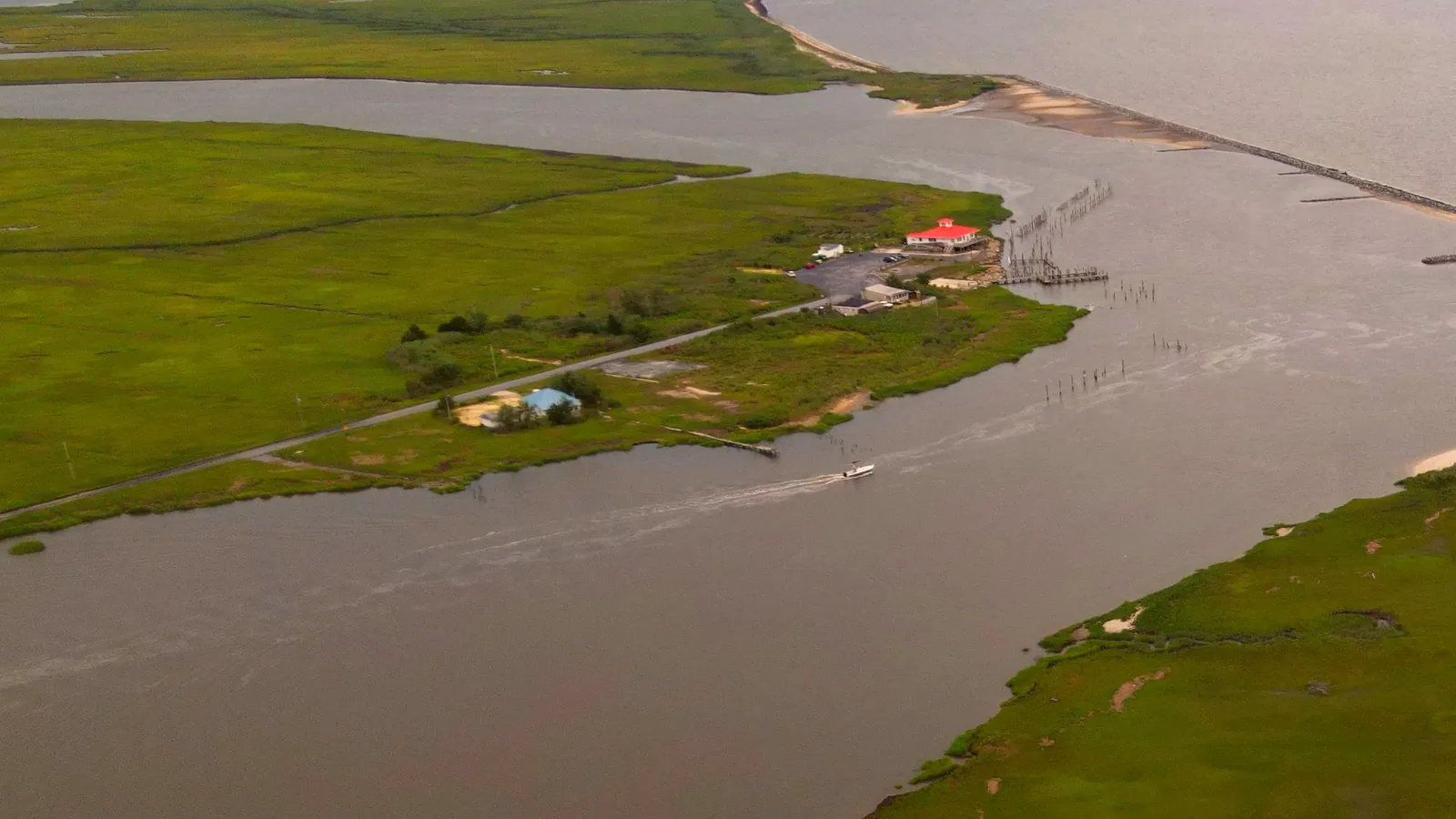
Waterfront estates, farm ground and association frontage along the Inland Bays and the Delaware Bay shore.
Sussex County is the coastal division’s home ground. Four principal lines of work run here: Phragmites programs on the water, forestry mulching and selective clearing on coastal-plain pine, lanes and corridors on sandy soils, and ditch and right-of-way ground and brush clearing for farms and tax-ditch organizations.
Storm cleanup and estate recovery runs here as well, with storm and emergency cleanup, on call 24/7,.
The marsh problem in this county
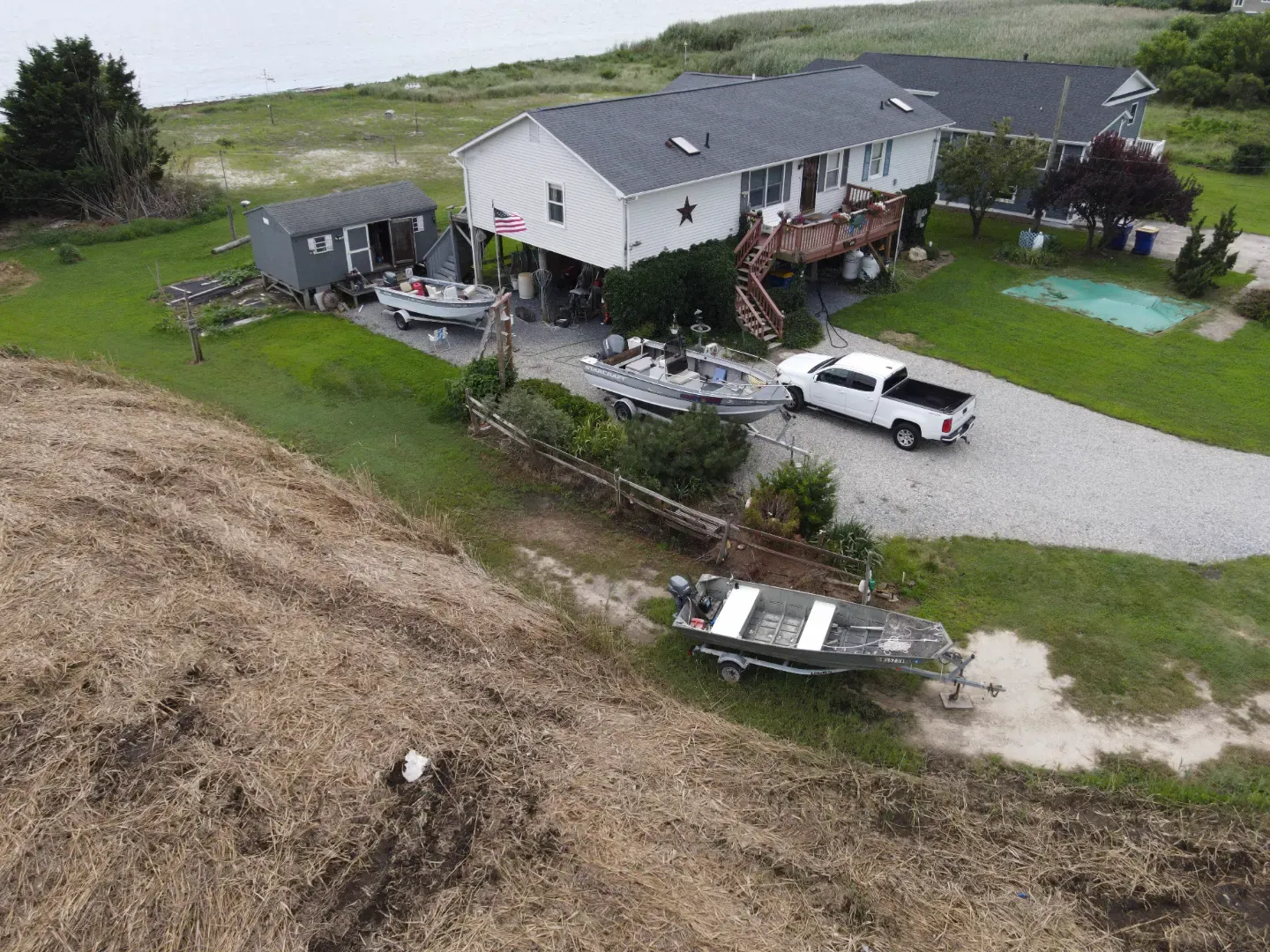
Phragmites can grow well over 10 feet tall, and waterfront homes, marinas and association common areas lose their view first. Ground and brush clearing alone does not control Phragmites; programs pair cutting with treatment.
- Phragmites programs for waterfront and associations
- Coastal-plain mulching and lot clearing
- Lanes and corridors on sandy soils
- Ditch and right-of-way ground and brush clearing
- Storm cleanup, requests taken any day by email
How Sussex work is scheduled
Coastal ground has its own variables: stand size and marsh access, tidal and regulated edges, low-bearing ground, and distance from the Brandywine Valley core. Sussex work is scheduled in consecutive blocks rather than single days.
How it is documented
Coastal projects are photographed from the air before and after where the site allows, and the record belongs to the owner.
Five steps, in this order.
- Phragmites assessment and mapped standThe stand or the work area is walked and mapped, with access, tidal edges and low-bearing ground noted.
- Permit path confirmed with DNRECThe regulatory status of the site is confirmed with DNREC in writing before work begins, at no cost to the owner.
- Year 1 treat then clearLicensed treatment in late summer under separate paper, then a winter clear and mulch of the standing dead material.
- Years 2 to 3 spot-treat and maintenance clearRegrowth is spot-treated and the stand gets a light maintenance clear, on firm or frozen ground.
- Annual maintenance, drone-verifiedA yearly visit holds the result, and each year is photographed from the air for the owner’s record.
Sussex County, Delaware town pages
One page for each of the 25 incorporated municipalities in Sussex County. These are communities we cover, not a list of completed projects.
- Bethany BeachCoast
- BethelRiver
- BladesRiver
- BridgevilleFarm
- DagsboroInland
- DelmarBorder
- Dewey BeachCoast
- EllendaleForest
- Fenwick IslandCoast
- FrankfordInland
- GeorgetownForest
- GreenwoodFarm
- Henlopen AcresCoast
- LaurelRiver
- LewesCoast
- MilfordRiver
- MillsboroInland
- MillvilleInland
- MiltonRiver
- Ocean ViewCoast
- Rehoboth BeachCoast
- SeafordRiver
- SelbyvilleFarm
- Slaughter BeachCoast
- South BethanyCoast
Keep reading
- Sussex County, full area page
- Phragmites programs
- Coastal-plain clearing
- Coastal & Phragmites Management division home
- Coastal & Phragmites Management terms and definitions
Sussex County background: parcel counts for each Sussex County ZIP code (SussexCounty.ai)
Phragmites, permits, cost-share and timing
Regulatory notes are general guidance; Huntly confirms the rules that apply to each site before work.
What shapes the cost of a Phragmites program in Sussex County, DE?
The size and density of the stand, access to the marsh edge, the frontage involved, the number of years in the program and whether licensed herbicide application is part of it. Licensed applications and permits are quoted as separate visible lines, and every program is priced in writing after an assessment of the stand.
Does Delaware help pay for Phragmites control?
DNREC’s cost-share program covers 87.5% of aerial herbicide treatment for qualifying Phragmites stands (landowner pays 12.5%), applied by helicopter in late summer and early fall over a three-year commitment. Enrollment requires 5 to 200 acres. Applications are first-come, first-served with a mid-summer deadline. If you qualify, we will tell you and help you enroll.
Does ground and brush clearing alone get rid of Phragmites?
No. Ground and brush clearing alone does not control Phragmites; programs pair cutting with treatment. Its rhizomes can spread more than 30 feet sideways and about 3 feet deep (DNREC).
Do I need a permit to cut Phragmites in Delaware?
Activities in Delaware wetlands generally require a DNREC permit (7 Del. C. § 6604), with some exemptions. We confirm with DNREC Wetlands and Waterways before cutting or spraying in tidal wetlands.
When is marsh work scheduled?
Mechanical ground and brush clearing is scheduled on firm or frozen ground in winter. Herbicide is applied by a Delaware-licensed aquatic applicator in the late-summer window DNREC uses, and the state cost-share program sprays by helicopter in late summer and early fall. Track carriers working on low-ground-pressure tracks reach marsh edges that trucks and tractors cannot.
More from the Coastal & Phragmites Management division
- Phragmites management programs
- Marsh-edge ground and brush clearing
- Coastal-plain selective clearing
- Ditch and right-of-way ground and brush clearing
- Permits and DNREC on coastal ground
- Community associations and waterfront frontage
- New Castle County, Delaware
- Land work in Chester County & SE Pennsylvania
- Land work in Northern Delaware
- Land work in Sussex County, Delaware
- All counties and towns we serve
Let’s walk the shoreline.
hello@huntlyland.comSend the town, rough acreage and two or three photographs. We reply by email with site-walk times, and a written scope follows the walk.
Delaware & coastal line: (302) 497-5263 · Main line: (484) 486-7272
Office hours Monday to Saturday, 8 a.m. to 4 p.m. On call 24/7 for storm and emergency cleanup. If anyone is in danger, call 911 first.