Decision guide
Forestry Mulching for Horse Pastures
Reclaiming a pasture with a mulcher is quick. Getting it safe for horses takes a plan for toxic trees, fence lines, mulch depth, stumps and footing.
Forestry mulching can reopen a horse pasture, but horses change the plan. Wilted red maple leaves are toxic to horses, and extension sources split on whether to remove or fence the trees. Mulch deeper than about 4 inches suppressed plant growth in Forest Service studies, so agree depth, stump follow-up and turnout timing first.
Pasture safety before the crew arrives
A horse pasture is not a field of grass with some trees in it. It is a place where animals eat what is in reach, and what is in reach changes the day a mulcher goes through. Before any work, walk the area with the owner and, if possible, a local extension agent or veterinarian. The University of Georgia Equine Program recommends routine pasture inspections, prompt removal of toxic trees and consultation with the county extension agent for plant identification and control.
The checklist below pulls together what the extension sources say and what we ask for on a site walk.
| Item | What the sources say | What to ask for |
|---|---|---|
| Red maple | Wilted or dried leaves are toxic to horses and fresh leaves are not (Minnesota, Michigan State). Georgia says remove the trees or fence them. Minnesota says do not cut maples in horse pastures and keep branches out of reach. | Decide tree by tree. Plan for storm and pruning leaf drop. |
| Other toxic trees | University of Georgia lists yew, black locust, buckeye, boxelder seeds, and wilted cherry, peach and plum leaves as hazards. | Identify before cutting. Remove or fence per extension advice. |
| Mulch depth | Forest Service: in the studies reviewed, plant cover fell to zero at forest floor depths past 4 inches and did better at about 2 inches or less. | Agree a depth before work, especially if you will reseed. |
| Stumps and sprouts | Maples reproduce by stump sprouts (Minnesota). Hardwood stumps sprout unless the root system is killed (Virginia Cooperative Extension). | A follow-up pass in year one, written into the plan. |
| Fence lines | Minnesota: fence horses out of areas with many wilted maple leaves. Georgia: fence fruit trees well beyond the drip line. | Clear a working strip and agree where trees stay. |
| Ground and footing | Forest Service: work dry soils. Tracks rut less than wheels. Virginia Cooperative Extension: a new pasture can take a year or more to establish. | Keep horses off until the ground is firm and seeded. |
Red maple and wilted leaves
The best documented hazard in this area is red maple. The University of Minnesota says horses must eat 1.5 to 3 pounds of dried or wilted maple leaves per 1,000 pounds of body weight to become sick, and that fresh maple leaves are not toxic. Dried maple leaves can stay toxic for four weeks, and illness normally occurs in autumn when leaves fall. Leaves collected after September 15 are more toxic, and wilted leaves from summer storms can also cause illness. Signs include depressed behavior, dark red or brown urine and not eating.
Michigan State Extension adds that ponies and donkeys can show signs after eating as little as half a pound. It suggests temporarily fencing around maple trees, trimming lower branches, giving alternative forage such as hay in fall, removing horses from the area in fall, and cleaning up leaves and placing them where horses cannot reach them.
The sources differ on the trees themselves. Minnesota says not to cut down maple trees in horse pastures and to keep branches out of reach, and to fence around small trees. Georgia says red maple trees should be removed or securely fenced to prevent access to fallen leaves. We follow the owner and the veterinarian on that choice. Wilted leaves also come from trimming, frost and storm damage, so any work that drops maple limbs creates the situation the sources warn about. Maples also reproduce by stump sprouts, per Minnesota, so a mulched maple stump may send up new shoots in the pasture.
Other trees to identify first
The University of Georgia names several more hazards. Yew is extremely toxic, with as little as half a pound lethal, and should be removed from equine properties. Black locust is toxic in all visible parts, though horses usually avoid it unless forage is short. Buckeye leaves, sprouts and nuts are toxic. Seeds from female boxelder trees can cause seasonal pasture myopathy, with mortality approaching 90 percent. Cherry, peach and plum trees are a danger when leaves wilt, and Georgia says to fence them well beyond the drip line if they cannot be removed. Oaks are moderately toxic, mainly green acorns and young leaves.
Our job is cutting and mulching, not plant identification. If you are unsure what a tree is, send photographs and ask your county extension office before we cut. The cut debris stays where it falls, so what is cut matters.
Fence lines, mulch depth and stumps
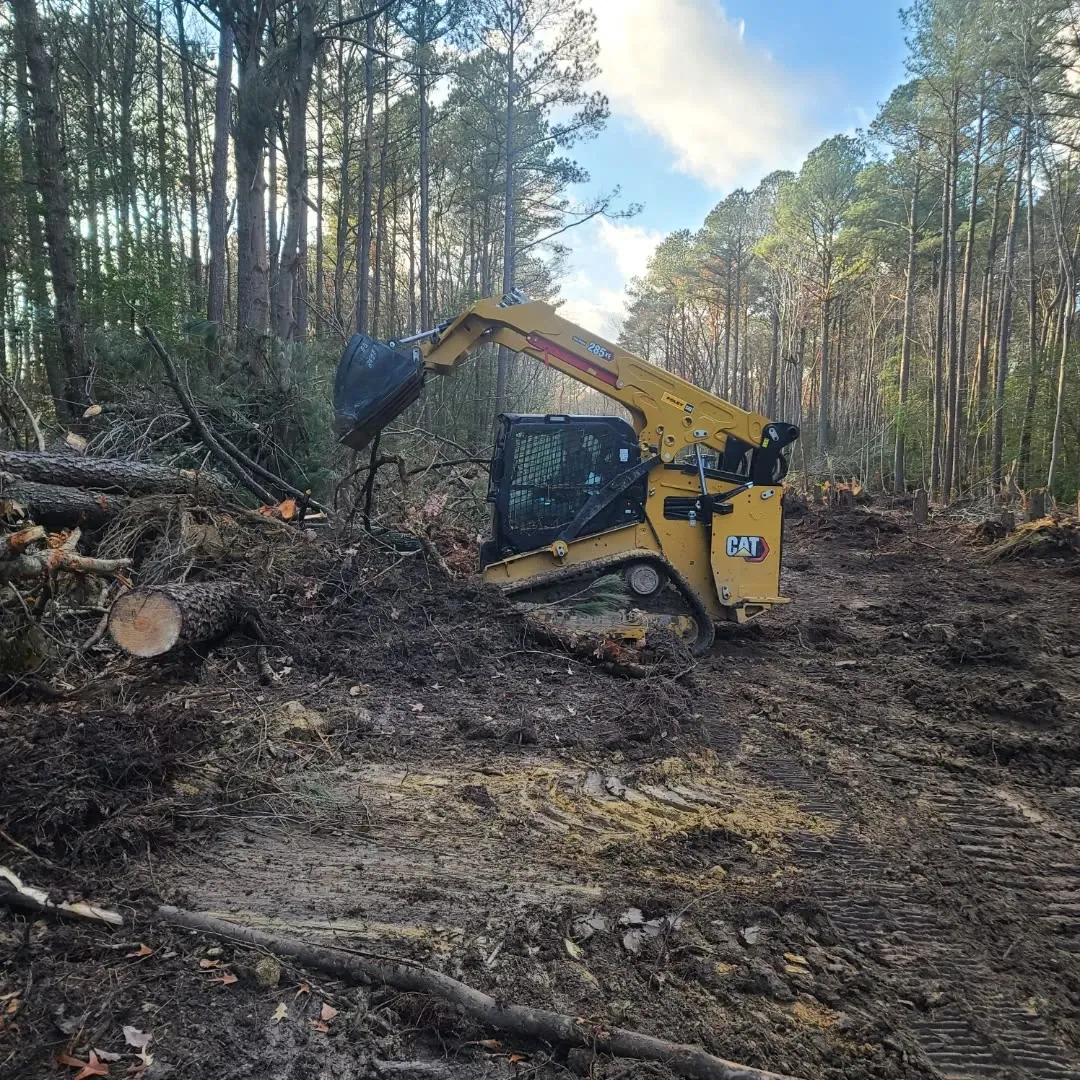
Fence lines are where a mulcher and a brush cutter earn their keep. We use the BRX418 brush cutter along fences and edges where the mulcher does not fit, and the grapple moves limbs and debris out of reach of the animals. The extension advice to keep wilted leaves and toxic branches out of reach translates into a clear strip along the fence and a plan for where cut material goes.
Mulch depth deserves a number. The Forest Service reports that in Colorado conifer studies, plant cover and species richness fell to zero when the forest floor depth exceeded 4 inches, and did better at about 2 inches or less. A pasture you plan to seed needs grass to grow through the layer. Ask for a depth in writing.
Stumps stay. Virginia Cooperative Extension says most hardwood trees sprout vigorously from the stump unless something is done to kill the root system, and Penn State describes stump sprouts as coming from dormant buds at the root collar. A pasture needs a follow-up pass to catch sprouts while they are small.
Footing, reseeding and turnout
Mulch is not a finished surface. The Forest Service says mastication places small pieces on the soil to decompose, and the first season is a mix of pieces, stump tops and bare ground. We suggest keeping horses off until the ground is firm and you have walked it for stumps and holes.
The Forest Service advises working dry soils and notes that tracked machines rut less than wheeled ones, which protects the pasture you are trying to save. Virginia Cooperative Extension says a pasture needs soil tests to set lime and fertilizer, seeding at the right time, usually spring or fall, and that it can take a year or more to establish. It also says a minimum of two acres of pasture per horse is generally needed for healthy sod and ground cover.
We plan the clearing and the follow-up. Seeding, soil testing and grazing plans are for you and your pasture advisor. This is general information, confirm with the township or agency for your parcel.
Questions about mulching horse pastures
Sources: University of Minnesota Extension, Are maple leaves toxic to horses?, MSU Extension, Red maple tree leaves can be toxic to horses, University of Georgia Equine Program, Protecting Horses from Toxic Trees and Plants in Pastures, USDA Forest Service, To Masticate or Not (RMRS-GTR-381), Virginia Cooperative Extension, Options for Clearing Land: Pasture Establishment, Penn State Extension, Prolific Stump Sprouters. Veterinary and extension statements are quoted as written. Toxic plant lists are not complete; ask your veterinarian. This is general information, confirm with the township or agency for your parcel.
Are red maple leaves toxic to horses?
Wilted or dried red maple leaves are toxic to horses, and fresh leaves are not, according to the University of Minnesota. Dried leaves can stay toxic for about four weeks. Michigan State says ponies can be affected by as little as half a pound.
Should red maples be cut down in a horse pasture?
Extension sources differ. Minnesota says do not cut maples in horse pastures and keep branches out of reach. Georgia says remove the trees or fence them. Ask your veterinarian or county extension office, and tell us your decision.
How deep should mulch be left in a pasture?
The Forest Service reports plant cover fell to zero at forest floor depths past 4 inches in the studies it reviewed, and did better at about 2 inches or less. If you plan to seed, agree a depth in writing before work starts.
Do stumps regrow after mulching?
Often. Virginia Cooperative Extension says most hardwood trees sprout vigorously from the stump unless the root system is killed, and Minnesota notes maples reproduce by stump sprouts. A follow-up pass in the first year catches sprouts while small.
Call, or send the details.
(484) 486-7272hello@huntlyland.com. Send the town, rough acreage and two or three photographs. We reply with site-walk times, and a written plan follows the walk.
Office hours Monday to Saturday, 8 a.m. to 4 p.m. On call 24/7 for storm and emergency cleanup. If anyone is in danger, call 911 first.