Plant guides
Invasive Plants, Brush and Trees We Clear in PA and DE
Thirty-two plant guides for the Brandywine Valley, northern Delaware and the Delaware shore. Pick the one that matches what is growing on your ground.
We clear invasive shrubs, vines, reeds, grasses and overgrown trees across Chester County, Delaware County and northern Delaware, plus wet ground and marsh edges in Sussex County. Find your plant below, then open its guide. Each guide covers how to recognize it, how we remove it, and when it comes back.
Shrubs and brush
Thorny, dense or woody growth that takes over field edges, fence lines and woodland understory.
- Multiflora RoseArching thorny rose that forms tangled thickets along fences and pasture edges.
- Japanese BarberrySpiny low shrub that carpets woodland floors and hides ticks and thorns.
- Bush HoneysuckleLeafy upright shrubs that leaf out early and shade out everything beneath.
- PrivetEvergreen to semi-evergreen hedge shrub that escapes into dense stands.
- Autumn OliveSilvery-leaved shrub that fills old fields and spreads by bird-dropped berries.
- Wineberry and BramblesPrickly cane thickets that close over fence lines and clearings.
Vines
Climbing and trailing plants that smother shrubs, fences and trees.
- Porcelain BerryFast grape-like vine with speckled blue berries that blankets shrubs.
- Mile-a-Minute VineBarbed, triangular-leaved annual vine that races over low growth.
- Japanese HoneysuckleTwining evergreen vine that strangles saplings and covers the ground.
- Oriental BittersweetWoody vine that girdles and topples trees as it climbs.
- Poison IvyLeaves of three, as a ground cover or a hairy climbing vine.
- GreenbrierThorny, tough-rooted vine that binds brush into impassable walls.
Reeds, grasses and weeds
Tall stands and spreading perennials that outcompete pasture and meadow.
- Japanese KnotweedBamboo-like stalks that form tall, dense clumps along streams and lanes.
- Japanese StiltgrassLow, shade-tolerant grass that carpets woodland floors and trails.
- Running BambooSpreading bamboo that sends rhizomes well past where it was planted.
- MugwortAromatic spreading perennial that colonizes roadsides and field edges.
- Canada ThistlePrickly spreading thistle that takes over pasture and hayfield.
Trees and thickets
Volunteer and overgrown trees that close in lanes, fields and fence lines.
- Tree of HeavenFast-growing tree that suckers into groves along edges and lanes.
- Callery PearThorny escaped ornamental pear that forms thickets in fields.
- Norway MapleDense-shade maple that seeds into woodland and crowds natives.
- Black LocustThorny suckering tree that spreads into clonal groves.
- Eastern Red CedarEvergreen that fills idle pasture and fence lines.
- Loblolly Pine and Sweetgum ThicketsOvergrown pine and sweetgum regrowth on old fields and field edges.
- Red MapleFast-sprouting native maple that fills fence lines and field edges.
- Oak Saplings and BrushOak regrowth and thickets that close over open ground.
- White Pine and Virginia PinePines that seed into idle fields and pasture edges.
- Weeping WillowLarge ornamental willow along ponds and streams, cut back or removed.
Coastal and wet ground
Plants of ditches, ponds, marsh edges and low corners, mostly on the Delaware shore.
- Phragmites (Common Reed)Tall plumed reed that forms dense stands along ditches and marsh edges.
- Reed Canary GrassSod-forming wet-ground grass of ditches and pond edges.
- Groundsel Tree and Marsh ElderNative marsh-edge shrubs, thinned where they crowd lanes and sightlines.
- Purple LoosestrifeMagenta-flowered wet-ground perennial that spreads by seed and root.
- Willow ThicketsFast wet-ground willow regrowth that closes over ditches and ponds.
One cut is the start, not the finish
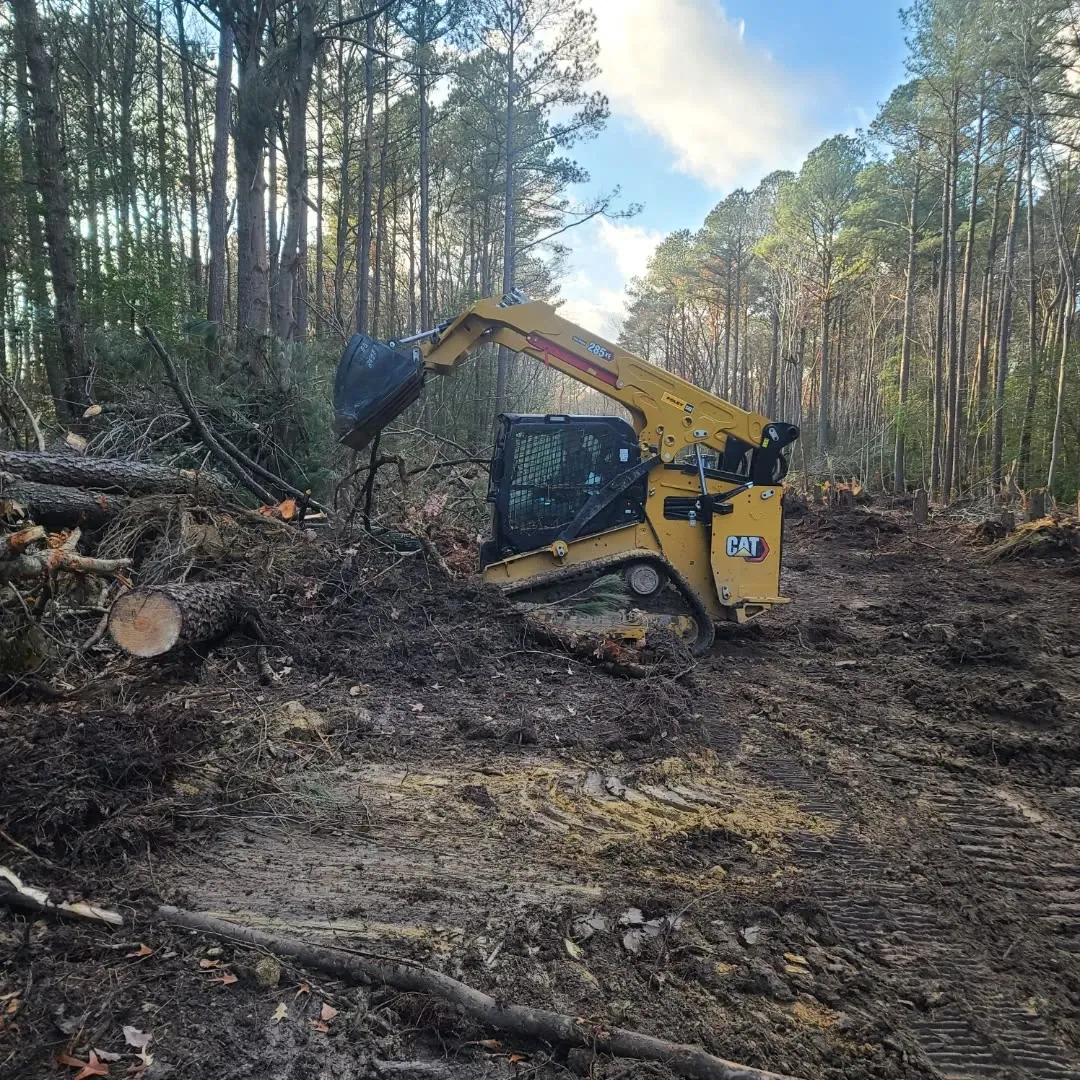
Most of these plants return from roots, rhizomes, stumps or buried seed. We cut and mulch with the Cat 285XE, the BRX418 brush cutter and the rock grapple, then come back on a written schedule to catch regrowth while it is young. The multi-year approach is laid out on the invasive regrowth plan page. Coastal and wet-ground work is covered on the coastal page and the Sussex County, Delaware page, and wetland approvals are confirmed with the approving body before work starts.
Questions about invasive plant clearing
Sources: Delaware DNREC, Invasive and Problematic Species and Diseases (which names the Delaware Invasive Species Council), Delaware DNREC, Facts About Phragmites. Plant details live on each guide, with its own sources. Regulatory notes are general; Huntly confirms the rules that apply to each site before work.
What plants does Huntly Land Co. clear in Pennsylvania and Delaware?
This page groups them: shrubs and brush, vines, reeds, grasses and weeds, trees and thickets, and coastal and wet-ground growth. We work with a Cat 285XE forestry mulcher, a BRX418 brush cutter and a rock grapple. Each plant has its own guide.
Why do cleared invasive plants come back?
Many spread by roots, rhizomes or buried seed, so cutting the top growth does not end them. Delaware DNREC says phragmites cannot be controlled by mowing or burning alone because rhizomes send up new shoots quickly. That is why we plan return visits.
Do you work on wet ground, marsh edges and ditches?
Yes, with approvals first. Wetland, stream and tidal ground can require approvals, and we confirm them with the approving body for that property before work starts. Send the town, rough acreage and photographs so the right agency can be identified.
Call, or send the details.
(484) 486-7272hello@huntlyland.com. Send the town, rough acreage and two or three photographs. We reply with site-walk times, and a written plan follows the walk.
Office hours Monday to Saturday, 8 a.m. to 4 p.m. On call 24/7 for storm and emergency cleanup. If anyone is in danger, call 911 first.