Service
Multiflora Rose Removal and Regrowth Plan
Multiflora rose, autumn olive, bamboo and bittersweet cut and mulched in place, then followed up in seasons two and three. Scoped on a private site walk and written as a plan, not a single pass.
Multiflora rose removal in Chester County works as a plan, not a single pass. Season 1 mulches the stems in place. Root crowns stay in the ground and resprout, so season 2 and season 3 follow-up passes cut the regrowth while it is young. Between visits you clear, graze or flag shoots, and a licensed applicator handles any chemical control.
Why one pass is not enough
Forestry mulching removes the top growth and leaves the root systems in the ground. Vigorous invasives such as multiflora rose and autumn olive push new shoots from those crowns, and bittersweet and bamboo behave the same way in their own manner. We say so up front and build the follow-up into the written scope. The general method is on the forestry mulching page, and whole-parcel work is on the land clearing page.
Season by season
| When | Step | What happens | What the owner does |
|---|---|---|---|
| Season 1, dormant season (late fall through winter) | Cut and mulch | Stems are ground in place with the drum mulcher. Leaf-off ground shows every stem and every thicket edge. Root crowns stay in the soil. Grapple work handles stems that need to be moved, and a brush cutter reaches fence lines and tight edges. | Stay off the cut ground while it is soft. Note where the heaviest patches were. |
| Season 1, first growing season | Regrowth expected | Crowns send up new shoots and seed in the soil germinates. This is normal and is built into the plan. It is not a failed job. | Photograph or flag thick patches. Clear or graze where the ground and your animals allow. |
| Season 2, early to mid growing season | Follow-up pass 1 | Regrowth is cut while it is young and soft, using the brush cutter or mulcher depending on stem size. Each cut draws the crowns down. | Keep ground and brush clearing or grazing. Tell us about new patches along fence lines and edges. |
| Season 2, late season | Check | Walk the ground together or by photo and compare against the season 1 map of patches. | Keep a record of what came back and where. |
| Season 3 | Follow-up pass 2 and spot work | A lighter pass on what remains, with attention to bamboo edges and any bittersweet climbing into trees. Whether more visits are needed is decided on the ground. | Keep the ground maintained so seedlings do not re-establish. |
The schedule above is the typical shape. The number of follow-up passes, the timing and the finish standard are set on the site walk and written into the proposal. Pricing is written after the site walk.
How stems and root crowns are handled
Stems are ground into a mulch layer where they stand. Nothing is burned and nothing is hauled off. Root crowns are left in the soil, which keeps slopes and stream-side ground stable, and it is also why regrowth comes back and why the follow-up passes exist. If an owner wants crowns removed, that is an excavation scope, written separately after the walk.
What the owner does between visits
- Clear or graze regrowth where the ground and your animals allow it.
- Photograph or flag thick patches so the next pass goes straight to them.
- Keep seedlings from establishing on bare ground near cut edges.
- If you want chemical control on cut stems, a licensed applicator is used, and the rules are confirmed for each site before any application.
The plants on the plan
- Multiflora rose: thorny thickets that resprout from the crown. Cut and mulched in season 1, then followed up while shoots are young.
- Autumn olive: woody shrub that resprouts after cutting. Same sequence, with attention to larger stems.
- Bamboo: spreads by underground runners, so the edge of the stand is walked and watched each season.
- Bittersweet: a vine that climbs into trees. Ground growth is mulched and climbing stems are checked on each visit.
- Phragmites (common reed): tall, dense stands along ditches, ponds, marsh edges and wet field corners. It spreads by rhizomes and seed, so a single cut never finishes it. The plan is a multi-year cycle of cutting, watching the regrowth and returning to the thick patches. Wet ground changes what is allowed, so permits and approvals are confirmed with the approving body before work starts. Coastal marsh and Sussex County work is on the Coastal and Phragmites Management page.
- Japanese knotweed: resprouts from rhizome pieces, so cut material is handled to keep fragments from spreading and the stand is revisited through the season.
- Mile-a-minute vine and Japanese stiltgrass: annual invaders that return from seed. Timing matters most, so cutting is scheduled before seed set and the same ground is checked the next year.
What we run on the ground
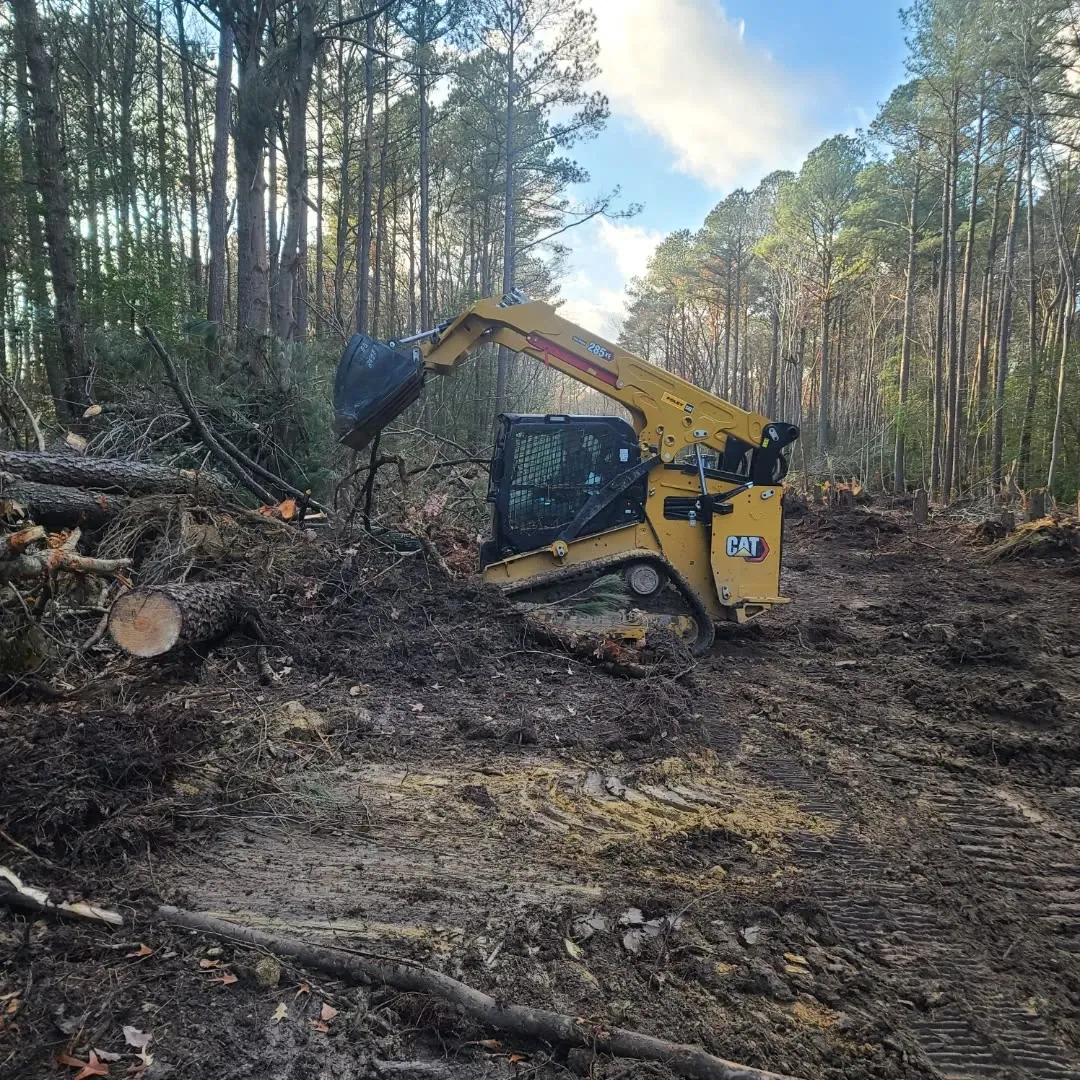
- Cat 285XE compact track loader with a forestry package, carrying the drum mulcher on a compact track loader.
- BRX418 brush cutter for regrowth passes, fence lines and tight edges.
- Rock grapple for moving stems and debris that should not stay in place.
More on the equipment sits in the glossary, including brush cutters and grapples. Areas served include Chester County and southeastern Pennsylvania, Delaware County, and northern Delaware.
Questions about the regrowth plan
Regulatory and chemical-control notes are general; Huntly confirms the rules that apply to each site before work.
Can forestry mulching get rid of multiflora rose in one pass?
No. One pass removes the top growth and leaves the root crowns in the ground, so multiflora rose resprouts. We plan for a season 1 cut and mulch, then follow-up passes in season 2 and season 3 that cut regrowth while it is young and the crowns are drawing down.
What happens to the stems and root crowns?
Stems are ground into a mulch layer where they stand, with no burn pile and no haul-off. Root crowns are not dug out, so they are the source of regrowth. If an owner wants crowns removed, that is an excavation scope discussed and written up separately after the site walk.
What should I expect to see after the first season?
Expect new shoots from the crowns once the growing season starts, plus seedlings from seed already in the soil. That is normal and it is why the plan has more than one visit. The shoots are easiest to cut when they are young, which is what the season 2 pass is for.
What do I do between visits?
Keep regrowth from getting ahead: clear or graze where the ground and your animals allow it, and photograph or flag any thick patches so we find them on the next pass. If you want chemical control on cut stems, a licensed applicator does it and the rules are confirmed for each site.
Do autumn olive, bamboo and bittersweet follow the same plan?
The structure is the same: cut and mulch in season 1, then follow up on regrowth. Autumn olive and bittersweet resprout from the base and roots. Bamboo spreads by underground runners, so the edge of the stand is walked and watched. Each species is scoped on the site walk.
How is the plan priced, and when does it start?
Pricing is written after a site walk, and the plan sets out each season's pass in the same document. Season 1 is usually timed to the dormant season, from late fall through winter, when stems are visible and the ground is firm. Timing for your property is confirmed on the walk.
Does the regrowth plan cover phragmites and other invasive plants?
Yes. Phragmites, Japanese knotweed, mile-a-minute vine and Japanese stiltgrass are handled on the same multi-year footing as multiflora rose, with timing set by the plant. Wet ground can need approvals, which are confirmed with the approving body before work starts. Call (484) 486-7272 or email hello@huntlyland.com with photographs.
Call, or send the details.
(484) 486-7272hello@huntlyland.com. Send the town, rough acreage and two or three photographs. We reply with site-walk times, and a written plan follows the walk.
Office hours Monday to Saturday, 8 a.m. to 4 p.m. On call 24/7 for storm and emergency cleanup. If anyone is in danger, call 911 first.