Plant guide
Wineberry and Brambles Removal and Regrowth
Prickly cane thickets along fence rows, lanes, pond edges and field borders, sorted into invasive wineberry and overgrown native brambles, then cleared to the line you set and revisited.
Wineberry is an invasive shrub. Native blackberry and raspberry are different plants that can overgrow too. Wineberry canes carry dense wine-red hairs. We identify the thicket first, clear it to the line you set with tracked equipment, then recut regrowth, because new canes keep coming from perennial roots.
How to recognize it
Wineberry, also called wine raspberry, is a thicket-forming shrub with biennial canes growing from a perennial root. Its tell is color. The canes are covered in dense wine-red hairs and prickly spines, the leaf stems are often wine-red, and the underside of each leaf is silvery from fine hairs. The University of Maryland notes the leaflets are larger and wider than those of garden raspberries. The flowers sit in star-shaped sepals thick with red bristles, which the USDA Forest Service says enclose the developing fruit until almost ripe. The ripe fruit is a small, glossy red raspberry with a hollow core.
Native brambles are the other half of this page. The Forest Service review lists Allegheny blackberry, black raspberry, sawtooth blackberry and Pennsylvania blackberry as native species that grow alongside wineberry. They have prickly canes and make thickets too, but the wine-red glandular hair is what sets wineberry apart, and the University of Maryland notes that blackberry fruit has a solid core where raspberry fruit is hollow. Overgrown native canes are a management question for the owner, not an invasive-species one. Wineberry is the invasive one. Send photographs of a cane, the underside of a leaf and any flowers or fruit, and we will say what we see before a site walk.
Why it matters locally
Delaware lists wineberry on the Invasive Plant List in Delaware Code, Title 3, Chapter 29, and on the Delaware Invasive Species Council plant list. The Forest Service says it is considered invasive in Maryland, Pennsylvania and several other eastern states. The University of Maryland says it forms thickets that out-compete native plants, grows densest in full sun with moist soil, and turns up along pond and wetland edges, fence rows, paths, forest edges, fields, orchards and roadsides.
Brambles are not all villains, though. The Forest Service notes that many species of birds and mammals use raspberry brambles for cover and nesting, and records veeries nesting on wineberry in New Castle County, Delaware. The same review says raspberries generally have little forage value for domestic livestock, which matters on a pasture edge. That is why we ask what you want from a thicket before we plan the cut.
How we remove it
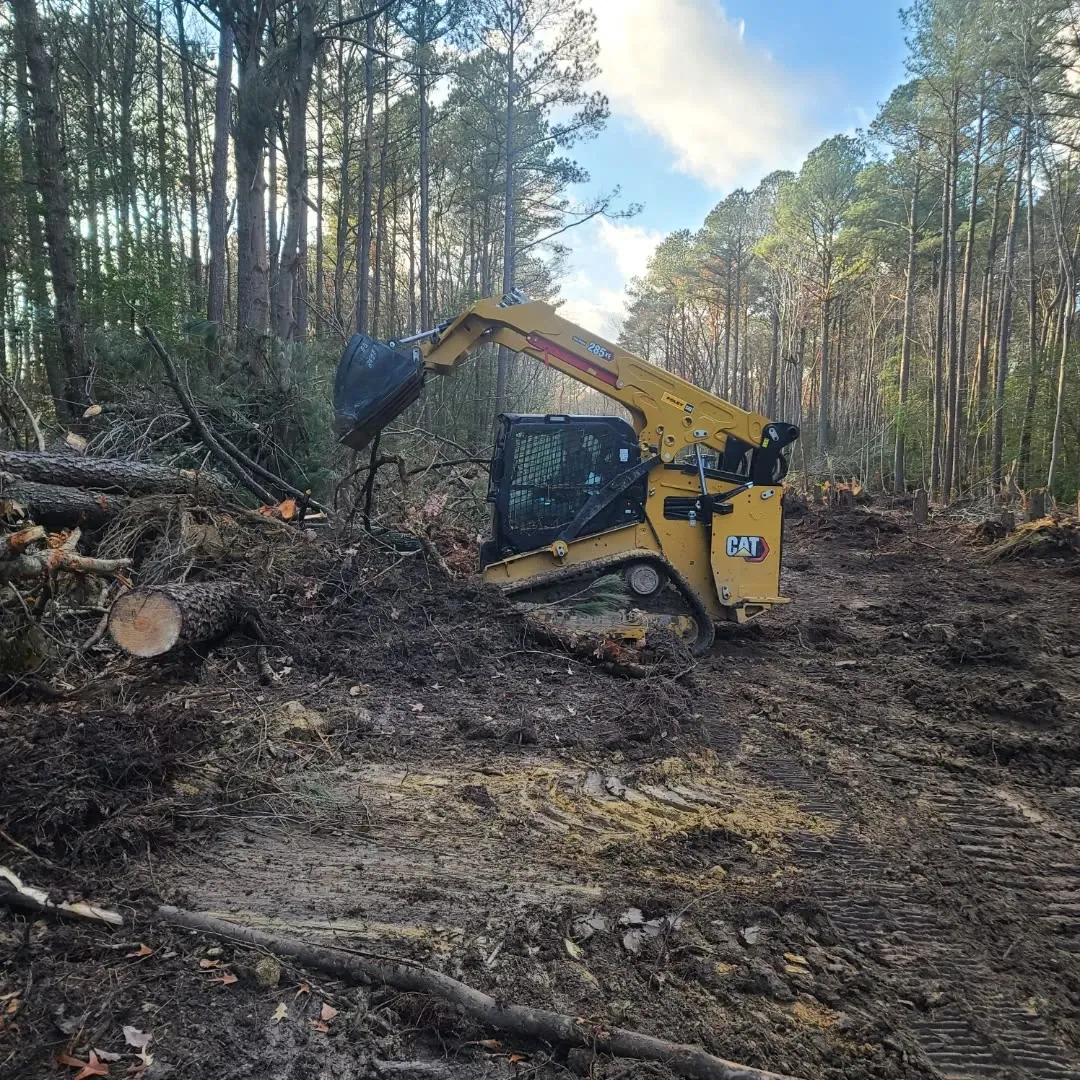
We mulch overgrown cane thickets in place with a drum mulcher on our flagship Cat 285XE, use the BRX418 brush cutter on fence lines, lane edges and trail margins, and use the rock grapple to lift cane piles and debris off the ground. For native blackberry and raspberry, the owner sets the line: clear it all, open a lane through it, or leave a patch for wildlife. For wineberry, the goal is the whole stand.
Cutting alone has limits with brambles. The Forest Service review says mowing blackberries stimulates sprouting, and that deep cultivation, which cuts the roots, produces large numbers of suckers. It also reports that mowing two or three times a season for two or more years may exhaust the plant's carbohydrate reserves. The University of Maryland adds that fresh-cut wineberry stems may root before dying if they are left on the soil surface. So a single pass is a start. On moist ground we look at where cut cane lies on the walk, and those spots are checked first the next spring.
Where an owner wants chemical follow-up on wineberry, a licensed applicator does that work on a schedule set with us.
Timing by season
| When | Step | What happens |
|---|---|---|
| Late fall through winter | Cut and mulch | With leaves down, the arching red-haired wineberry canes and the thicket outline show clearly, and dry or frozen ground is easier to cross. |
| Spring | Pull and check | Seedlings can be pulled while small, and the University of Maryland advises removing young seedlings from gardens and beds. New first-year canes rise from last year's roots and are checked. |
| Late spring to midsummer | Flowers and fruit | Wineberry flowers in late spring or early summer and the berries ripen in midsummer. Cutting canes before they fruit limits seed, and the Forest Service recommends removing and destroying fruiting branches to reduce the seed bank. |
| Summer | Recut regrowth | The Forest Service describes mowing two or three times a season over two or more years to exhaust the roots. Return passes follow that shape, with the count set on the walk. |
The schedule is the typical shape. Your dates, the number of passes and the finish standard are set on the site walk and written into the plan.
Regrowth and follow-up visits
The University of Maryland explains that wineberry canes last two years while the roots are perennial, so the plant keeps replacing canes. Thickets form easily where arching canes touch soil and root. First-year canes cannot produce seed, so preventing canes from maturing limits the plant's spread. The practical aim is to cut new canes before they reach their second year and fruit.
Expect new canes from the roots the first spring after clearing. Native blackberry and raspberry behave in much the same way, so a cleared native thicket also comes back unless it is kept cut. We schedule return passes to catch new canes while they are young. The number of visits depends on how dense the thicket was and whether a licensed applicator is treating wineberry between our passes, and it is written into the plan after the site walk.
What the owner can do
- Identify before you decide. Photograph a cane, a leaf underside and the flowers or fruit, and send them.
- Pull wineberry seedlings while they are small. The Forest Service says to remove the roots and any cane fragments completely, especially in moist soil.
- Do not plant wineberry, even though the fruit is edible. The University of Maryland advises cultivated raspberry or blackberry varieties instead.
- Decide which native bramble patches you want to keep for wildlife before work starts.
- Do not count on ground and brush clearing alone. The Forest Service says it stimulates sprouting.
Questions about wineberry and brambles
Sources: Delaware Code Title 3, Chapter 29, Invasive and Potentially Invasive Plants, Delaware Invasive Species Council, Invasive Plant List, University of Maryland Extension, Wineberry, USDA Forest Service, Fire Effects Information System: Rubus phoenicolasius. Regulatory and chemical-control notes are general; Huntly confirms the rules that apply to each site before work.
How do I tell wineberry from blackberry or raspberry?
Look at the canes and the leaf underside. Wineberry canes are covered in dense wine-red hairs and prickles, and its leaves are silvery underneath. The University of Maryland also notes that raspberry fruit has a hollow core while blackberry fruit has a solid core. Send photographs and we will say what we see.
Should I clear native blackberry and raspberry thickets?
That is your call, since they are native. The USDA Forest Service notes that birds and mammals use brambles for cover and nesting. We can clear a lane, a fence line or a whole field edge to the line you set, and leave patches where you want them.
Will mulching get rid of wineberry?
Not in one pass. The Forest Service says mowing blackberries stimulates sprouting, and wineberry sends up new canes from perennial roots. A mulching pass clears the thicket, then new canes are cut before they reach their second year, over several seasons.
When is the best time to cut wineberry?
We usually mulch in the dry or frozen part of the year, then recut regrowth. The University of Maryland notes wineberry cannot make seed on one-year-old canes, so preventing canes from maturing limits its spread. Any herbicide timing is set by a licensed applicator.
More about Wineberry and brambles
Regulatory notes are general guidance; Huntly confirms the rules that apply to each site before work.
Why does wineberry spread so fast along field edges?
University of Maryland Extension says wineberry canes re-root where the tips touch the ground, it can also spread by root buds, and animals spread seed in droppings. That's how a few canes become a thicket. Early removal is cheaper than waiting.
What do wineberry canes look like?
UMD Extension says the woody canes look reddish from a distance because of glandular hairs, leaves have three heart-shaped toothed leaflets with a whitish underside, and the bright red fruit looks like raspberries. Blackberries and raspberries lack that red hairy look.
Will wineberry grow back after cutting?
Yes, if canes touch soil they can re-root. Each cane lives two years, and new canes come up each year, per UMD. forestry mulching clears the thicket now, and a follow-up pass the next growing season cuts the new canes while they're small.
Does wineberry removal change the price?
Yes. Thorny dense canes, size of the patch, wet ground, fence lines and tangled wire all add time. Hand work near trees and fences costs more. Follow-up visits and applicator work are separate lines. Written price after a free site walk.
Can cost-share pay to clear wineberry and brambles?
Not usually, and never promised. EQIP brush management (practice 314) is a listed practice, and Pennsylvania's schedule sets the mechanical large-shrub rate each year. Whether wineberry on your land qualifies is NRCS's call. Ask your local NRCS office before work starts, and we'll quote either way. Huntly confirms the rule that applies to each site before work.
Which brambles should I leave when we clear?
Native blackberry and raspberry canes give fruit and cover for birds. If you want to keep them, tell us at the walk. We can thin around them or clear wineberry only, though the red canes mix in. Hand work costs more than machine clearing.
Where does wineberry show up most in Chester County and Delaware?
UMD says it grows in moist soils, woodlands, forest edges, and stream and wetland margins, preferring open sunny areas. As general guidance, field edges, trail sides, old clearings and creek banks are typical in the service area.
Call, or send the details.
(484) 486-7272hello@huntlyland.com. Send the town, rough acreage and two or three photographs. We reply with site-walk times, and a written plan follows the walk.
Delaware & coastal line: (302) 497-5263 · Main line: (484) 486-7272
Office hours Monday to Saturday, 8 a.m. to 4 p.m. On call 24/7 for storm and emergency cleanup. If anyone is in danger, call 911 first.