Plant guide
Purple Loosestrife Removal and Regrowth
Magenta flower spikes along ditches, pond edges and wet field corners, caught while stands are small and timed so cutting does not spread seed. Wet ground brings approvals, so those are settled first.
Purple loosestrife is a wet-ground perennial that spreads by millions of seeds and by its roots. The University of Delaware calls it sporadic in Sussex County, which makes early action worthwhile. We time cutting around seed production, remove the material, and return to catch regrowth. Wet ground approvals come first.
How to recognize it
Purple loosestrife is a perennial with a square, four-sided stem and long spikes packed with pink to magenta flowers, each with 5 to 7 narrow, wrinkled petals. Leaves are hairy and grow in opposite pairs or in whorls of three or four. The University of Delaware Cooperative Extension says plants usually stand 1.5 to 6 feet tall and can reach 10 feet on nutrient-rich ground.
It blooms from late June through September, about 8 to 10 weeks after spring growth begins, which makes midsummer the easiest time to find it. Stands show up as purple bands along a ditch or pond edge. If you are unsure, send photographs of the stem and a flower spike and we will say what we see before a site walk.
Why it matters locally
The University of Delaware reports that purple loosestrife is widespread in New Castle County and found only sporadically in Kent and Sussex Counties. For a Sussex owner that is useful news: a few plants in a ditch or pond edge are far easier to deal with than an established band, and catching them early is the practical advantage.
The reason to act is how it multiplies. Extension notes that a mature plant can produce hundreds of thousands of seeds that stay viable in the soil for many years, and the plant also spreads by underground shoots and roots. Seeds drift along waterways and ride in mud on wildlife, people and vehicles, so a stand at the head of a ditch can seed everything downstream.
How we remove it
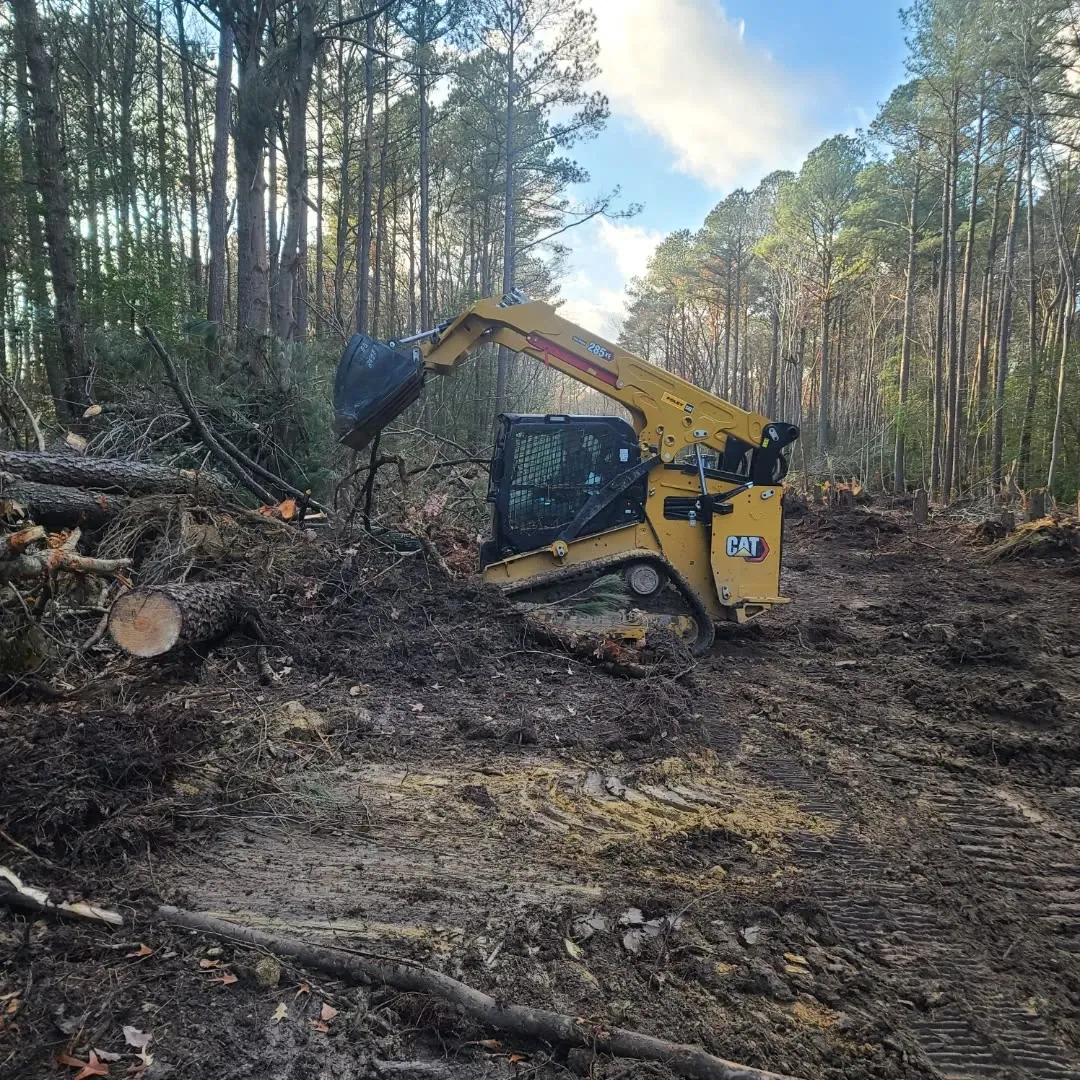
We mulch standing growth in place with a drum mulcher on our flagship Cat 285XE, and use the BRX418 brush cutter for ditch banks, fence lines and edges the mulcher cannot reach. The rock grapple moves stems and debris that should not stay where they fall. Nothing is burned. On soft ground we pick the dry window and decide on the walk whether our tracked equipment can work the area without rutting it.
Timing is the main design question. Extension warns that disturbing plants during seed production can spread seed. So we avoid heavy work in late summer and early fall, remove cut flower spikes and stems from the site instead of leaving them to drop seed, and check where seed may already have settled. Very small infestations, under about 100 plants, can be handled by hand-pulling or digging, which owners can often do themselves. Where chemical control is considered, products used in or near water must be labeled for aquatic use, and that is a decision for a separate pesticide applicator.
Extension also describes biological control, which uses beetles and a root-feeding weevil approved by the USDA in 1992. That is a slower approach and is not part of our work, but it exists. Wet ground changes what is allowed. Before any work in or beside a wetland, stream or tidal area, the approvals that apply are confirmed with the approving body for that site, and we do not start until the owner has them.
Timing by season
| When | Step | What happens |
|---|---|---|
| Late fall through winter | Cut and mulch | After seed has dropped, dry or frozen ground makes access easier. Wet-ground approvals must be in hand first. |
| Late June through September | Flowering window | Plants are easiest to find while in bloom. Mark stands now and photograph them. Avoid disturbing plants once seed is forming. |
| Spring and early summer | Check regrowth | Walk the stand, mark regrowth and new seedlings and decide whether a pass is needed before flowering. |
The schedule is the typical shape. Your dates, the number of passes and the finish standard are set on the site walk and written into the plan.
Regrowth and follow-up visits
Expect regrowth from roots and from seed in the soil. Seeds can stay viable for many years, so a cleared strip can sprout seedlings for several seasons. Open mud left after cutting is the best seedbed for the next generation.
We schedule passes to catch plants young and before they flower. The number of visits depends on stand size, wetness and whether the seed has spread downstream. It is written into the plan after the site walk. A small, early stand may be done in a season or two, while a large one needs longer.
What the owner can do
- Walk your ditches and pond edges in July and August and photograph anything with magenta flower spikes.
- If you find fewer than about 100 plants, hand-pulling or digging out the base is an option outside of seed season.
- Bag or haul away flower spikes and stems. Do not compost or toss them in water.
- Do not drive or wade through a flowering stand, since seed rides in mud.
- Ask the approving body about the wet ground early. Approvals can take longer than the cutting.
Questions about purple loosestrife
Sources: University of Delaware Cooperative Extension, Purple Loosestrife fact sheet. Regulatory notes are general; Huntly confirms the rules that apply to each site before work.
Is purple loosestrife in Sussex County?
Yes, though not heavily. The University of Delaware Cooperative Extension says it is widespread in New Castle County and found only sporadically in Kent and Sussex Counties. That makes early detection and removal worthwhile before stands spread along ditches and ponds.
Can I just cut or clear purple loosestrife?
Cutting alone does not end it, because the plant spreads by roots and seeds. Extension warns that disturbing plants during seed production can spread seed. We time work outside that window, remove cut material, and return for regrowth.
What is the best time to remove it?
Plants are easiest to find in bloom, from late June through September, but heavy disturbance is best avoided while seed forms. We usually cut and mulch in the dry or frozen part of the year and mark stands during bloom.
Do I need approval to work in a wet ditch or pond edge?
It depends on the site. Wetland, stream and tidal ground can require approvals, and we confirm them with the approving body for that property before work starts. Send the town, rough acreage and photographs so the right agency can be identified.
More about Purple loosestrife
Regulatory notes are general guidance; Huntly confirms the rules that apply to each site before work.
How many seeds does one purple loosestrife plant make?
Penn State's quicksheet says one plant can produce over 500,000 seeds, and flowering runs from about late June into September. That's why timing matters. Cutting before seed set matters more than pulling after. We plan visits around bloom and seed so we aren't spreading more.
When should purple loosestrife be cut in PA and DE?
Before it sets seed. Penn State says cutting reduces or prevents seed set, and if seed has formed, remove the flowers for disposal first and then cut the plant to the ground. Flowering starts about late June. We plan the visit around that. Huntly confirms the rule that applies to each site before work.
Will ground and brush clearing or mulching kill purple loosestrife?
Not by itself. Cutting prevents seed but the roots can resprout. Penn State says large root pieces left behind may resprout. Expect to return for follow-up cuts across seasons, and a licensed applicator's treatment is quoted as a separate visible line if you want a finish.
Can beetles control purple loosestrife instead?
Sometimes in large infestations. Penn State says biological control agents that feed solely on purple loosestrife, most often Galerucella beetles, can be released, and results in Pennsylvania State Parks have been variable. Releases are coordinated with the USDA-APHIS Pennsylvania office. It's a land-manager choice rather than a Huntly service, and we can work with that plan.
Where does purple loosestrife show up most in the service area?
Wet places. Penn State lists wetlands, ditches and riparian areas. As general guidance, pond edges, roadside ditches, stream banks and wet field corners are typical. If you see magenta spikes in July along a ditch, there's likely more seed coming down the water.
Does purple loosestrife change the price of clearing?
Yes. Wet or soft ground, dense stands, ditch access and the need to bag flower heads all add time. Low-ground-pressure tracks help on soft soil. Follow-up cuts and licensed treatment are separate lines. Every job is priced in writing after a free site walk.
Is purple loosestrife legal to plant or sell?
Not in Pennsylvania. Penn State notes it's a noxious weed there, so sale and propagation are prohibited. It's also on Delaware's Invasive Plant List. Removing it from your own land is fine, and we can handle it. Huntly confirms the rule that applies to each site before work.
Can I get cost-share to remove purple loosestrife?
Not usually. It's an herbaceous wetland plant, and brush management is written around shrubs. NRCS decides eligibility, so ask your local office before work. Huntly quotes the cutting and follow-up either way, and treatment by a licensed applicator stays a separate line.
Related pages
Call, or send the details.
(484) 486-7272hello@huntlyland.com. Send the town, rough acreage and two or three photographs. We reply with site-walk times, and a written plan follows the walk.
Delaware & coastal line: (302) 497-5263 · Main line: (484) 486-7272
Office hours Monday to Saturday, 8 a.m. to 4 p.m. On call 24/7 for storm and emergency cleanup. If anyone is in danger, call 911 first.