Plant guide
Porcelain-berry Removal and Regrowth
Grape-like vine blanketing streambanks, fence rows and woodland edges, cut back with tracked equipment, then watched and revisited. Wet ground brings approvals, so those are settled first.
Porcelain-berry cannot be cleared with one cut. Penn State Extension says it resprouts from the cut stem and from root pieces left in the soil, and its seed stays viable for years. We cut and mulch the mat, then return to catch regrowth. Herbicide work is done by a licensed applicator, and wetland approvals come first.
How to recognize it
Porcelain-berry is a woody, deciduous climbing vine in the grape family. It climbs fences, shrubs and tree edges with tendrils, and Penn State Extension says one plant can run 20 to 25 feet in a single season under ideal conditions. The leaves are dark green, heart-shaped to deeply lobed, with toothed edges, and they vary a lot even on one vine. In summer it carries flat clusters of small greenish-white flowers, and in fall the fruit comes in speckled shades of lilac, green and bright blue. Penn State notes that the berries are poisonous to people.
It looks a great deal like native wild grape, and the difference matters because only one of them is a problem. Penn State and the University of Maryland give the same two checks. Cut a stem and look at the pith: porcelain-berry's is white and wild grape's is brown. Then look at the bark: wild grape bark peels and shreds, and porcelain-berry's does not. The University of Maryland adds that porcelain-berry flowers and fruit are held above the stem, while native grape clusters droop. If you are unsure, send photographs of the leaf, the bark and a cut stem and we will say what we see before a site walk.
Why it matters locally
Delaware lists porcelain-berry on the Invasive Plant List written into Delaware Code, Title 3, Chapter 29, which restricts importing, selling, distributing and propagating viable parts of listed plants, and it appears on the Delaware Invasive Species Council plant list. Penn State Extension says it ranks as a severe threat on Pennsylvania's invasive species list. The University of Maryland describes a plant of damp, shady ground: streambanks, forest edges and pond margins, where it forms dense mats that shade out whatever grows beneath.
On a Brandywine Valley property, creek corners, pond edges and old fence rows are the places to look first. Penn State warns that when the vine grows over trees and shrubs it shades younger plants and leaves older growth more vulnerable to storm damage. Delaware's state botanist, quoted by DNREC, describes the wider pattern: invasive plants overtop, cast shade and take soil space from native species, and native populations slowly shrink. A vine-draped fence line is also harder to inspect and repair.
How we remove it
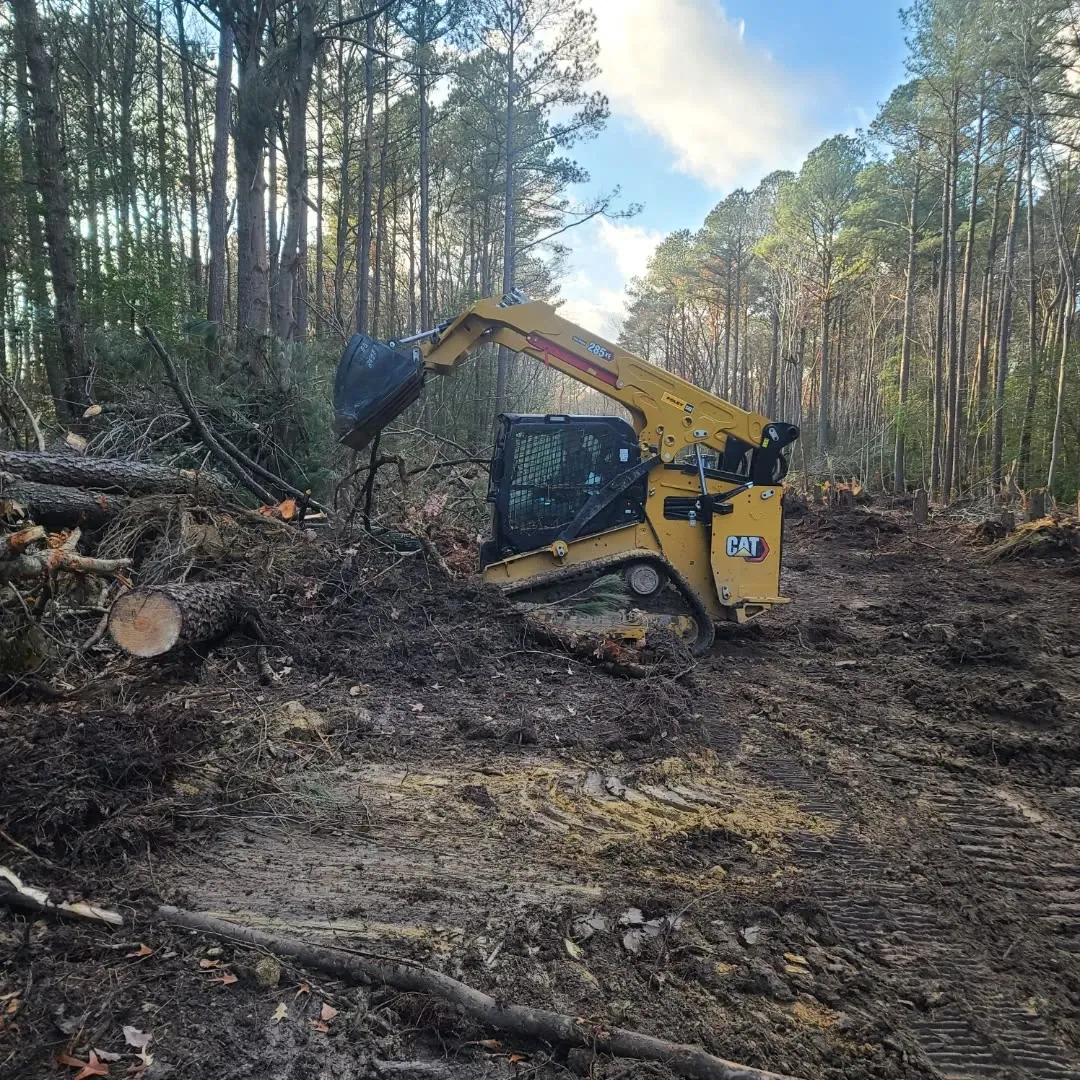
We cut vine mats and the vine-draped brush they climb with a drum mulcher on our flagship Cat 285XE, and use the BRX418 brush cutter for fence lines, stone walls and edges the mulcher cannot reach. The rock grapple pulls loose vine, wire-tangled stems and debris clear so cut material does not stay draped over fences and shrubs that are staying. The site walk sets which trees and shrubs stay.
Mulching takes the top growth. It does not take the root system. Penn State describes an extensive root system with a large taproot, and says the plant will resprout when the above-ground part is cut and from any root pieces left in the soil. That is why the first pass is the start of a plan and not the finish. Both extension sources say large vines can be dug out with a shovel if the whole root comes up, but on a mat of any size that is not practical, so regrowth is cut again on schedule. Where an owner wants chemical follow-up, a licensed applicator does that work on a schedule set with us.
Streambanks and pond margins can fall under wetland or stream rules. Before any work in or beside regulated ground, the approvals that apply are confirmed with the approving body for that site, and we do not start until the owner has them.
Timing by season
| When | Step | What happens |
|---|---|---|
| Late fall through winter | Cut and mulch | Leaf-off and dry or frozen ground make the vine mat and the fences it climbs easy to see and easier to cross. Wet-ground approvals must be in hand first. |
| Early spring | Pull and recut | Porcelain-berry flowers on new growth, per Penn State, and the University of Maryland says pulling in fall or early spring prevents the next season's flower buds. Small vines can be pulled and regrowth recut. |
| Summer | Before fruit | Flowers open June through August. The aim is to have the stand cut back before fruit forms. The University of Maryland describes cutting large vines in summer and letting them resprout before treatment, and that treatment is the applicator's call. |
| September and October | Fruit season | Berries ripen. Where vines carry fruit, the fruit should be collected and bagged so the seed does not spread. |
The schedule is the typical shape. Your dates, the number of passes and the finish standard are set on the site walk and written into the plan.
Regrowth and follow-up visits
Expect green shoots from roots and seedlings the first spring after cutting. The University of Maryland says repeated treatment will likely be necessary after the first removal, because seeds may stay viable in the soil and unseen root fragments can send up new growth. Penn State says the seeds can remain viable for several years, so preventing flowering and fruiting matters.
Birds and small mammals eat the fruit and spread the seed, which means a new vine can appear well away from the original patch. We schedule return passes to cut regrowth while it is young. The number of visits depends on how large the mat was, how wet the ground is and whether a licensed applicator is treating between our passes, and it is written into the plan after the site walk.
What the owner can do
- Cut a stem and check the pith before deciding what you have. White pith with bark that does not shred points to porcelain-berry.
- Pull small vines by hand in early spring or fall and dig out the whole root, as both extension sources advise.
- If a vine is carrying fruit, collect the fruit and put it in the trash, not the compost pile. Penn State gives that disposal advice.
- Do not plant it. Penn State notes it can still be bought at some nurseries, and Delaware restricts selling it.
- Photograph the patch from the same spot each month so spread is easy to compare.
Questions about porcelain-berry
Sources: Delaware Code Title 3, Chapter 29, Invasive and Potentially Invasive Plants, Delaware Invasive Species Council, Invasive Plant List, Delaware DNREC, Unseen Intruders, University of Maryland Extension, Invasives in your Woodland: Porcelain-berry, Penn State Extension, Porcelain Berry: An Unwanted Beauty. Regulatory and chemical-control notes are general; Huntly confirms the rules that apply to each site before work.
Can porcelain-berry be mulched away in one pass?
No. Penn State Extension says porcelain-berry resprouts when cut and from root pieces left in the soil. A mulching pass clears the top growth, then regrowth is cut and watched over several seasons.
How do I tell porcelain-berry from native wild grape?
Check the pith and the bark. Penn State and the University of Maryland both say porcelain-berry has white pith and bark that does not shred, while wild grape has brown pith and bark that peels. Send photographs and we will say what we see.
When is the best time to cut porcelain-berry?
We usually mulch in the dry or frozen part of the year, then recut regrowth before it flowers and fruits. The University of Maryland notes flowers open June through August and berries follow in September and October. Any herbicide timing is separate and is set by a licensed applicator.
Is porcelain-berry a problem in Chester County and Delaware?
Yes. Delaware lists it as invasive in both its Invasive Plant List and the Delaware Invasive Species Council plant list, and Penn State ranks it a severe threat in Pennsylvania. It is worth acting while the patch is small.
More about Porcelain-berry
Regulatory notes are general guidance; Huntly confirms the rules that apply to each site before work.
What color are porcelain-berry berries, and can I use the berries to ID it?
UConn Extension says berries go from pale lilac to green to bright metallic blue, and they stay on through winter. Wild grape fruit looks different. For a firm ID in winter, look at the stem. Berries help in late summer, the pith test works any time.
Why does porcelain-berry come back after cutting?
UConn says plants regrow from the rootstock and can resprout from roots and re-root from stem pieces touching soil. Birds also spread the seed, which can stay viable in the soil for years. That's why one cut isn't enough. We plan repeat visits and a licensed applicator step.
How many passes does porcelain-berry take to clear?
Plan on a first clearing and then follow-ups across at least two to three seasons. UConn says rechecking treated areas matters since resprouts and new seedlings are common. We pull small seedlings on follow-up visits and cut regrowth before it climbs. forestry mulching handles the heavy mats.
Who does the chemical follow-up on porcelain-berry?
A licensed applicator does any herbicide work, quoted as a separate visible line. We do the cutting and mulching, and the applicator treats the regrowth or cut stems at the right time. UConn lists early summer through fall as the window for foliar or cut-stem treatment.
Does porcelain-berry change the price of clearing?
Yes. Vines hung in trees, thick mats on fences, tangled wire and wet ground all slow the work. Hand work near trees costs more than machine work in open brush. Follow-up and any applicator treatment are separate lines. Every job is priced in writing after a free site walk.
Can I get cost-share for porcelain-berry removal?
Not usually. Vines aren't what brush management is written for, and NRCS decides eligibility. Ask your local NRCS or conservation district office before work starts. Huntly can quote the clearing and follow-up either way.
Call, or send the details.
(484) 486-7272hello@huntlyland.com. Send the town, rough acreage and two or three photographs. We reply with site-walk times, and a written plan follows the walk.
Delaware & coastal line: (302) 497-5263 · Main line: (484) 486-7272
Office hours Monday to Saturday, 8 a.m. to 4 p.m. On call 24/7 for storm and emergency cleanup. If anyone is in danger, call 911 first.